
Road Markings and Lane Control
Understand the markings that quietly control lane choice, overtaking and junction behaviour.
Why This Matters
Road markings are legal traffic signs. They often decide whether a lane choice or overtake is correct before the learner notices the mistake.
Coach Note
Many learners revise signs but not markings. In the test, both matter.
Learning Goals
- Recognise that road markings carry legal meaning.
- Use lane arrows and lane control signs early.
- Link white-line rules to overtaking decisions.
- Adapt speed and scanning around traffic-calming features.
Sections
Road Markings Are Traffic Signs
Treat them as instructions, not decoration.
Legal Meaning
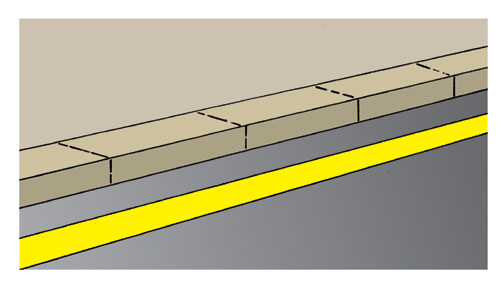
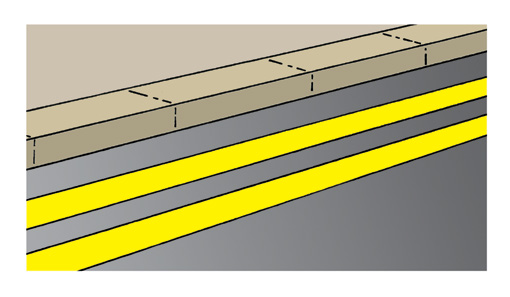
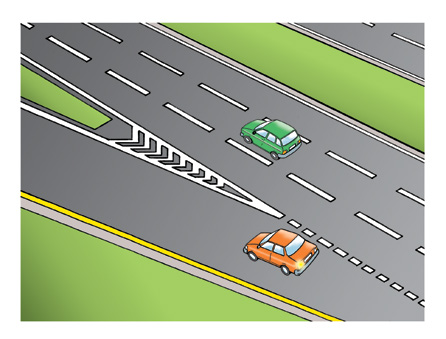
Road markings are a traffic sign in the form of a marking on the road. They must be understood and obeyed.
Lane Arrows
Lane arrows tell you what traffic in that lane must do. Read them early and set up before the pressure point.
Common Mistakes
- Seeing a lane arrow too late and forcing a last-second change.
- Following the car ahead instead of the lane marking.
- Treating markings as only advisory.
Line Types and Overtaking Judgement
White lines should change your behaviour before you commit to a manoeuvre.
Read The Line First
Before overtaking or moving across part of the road, read the line type and understand whether the move is restricted.
Why It Matters
A road may look open while markings still show that visibility or geometry makes passing unsafe.
Common Mistakes
- Starting an overtake because the road looks straight while ignoring the line pattern.
- Crossing restricted markings casually.
- Using road width as the only guide.
Quick Quiz
Why should road markings affect your overtake decision?
- A. Because they are optional guidance
- ✓B. Because they are legal traffic signs
- C. Because they only matter in cities
- D. Because they only apply in wet weather
Road markings have legal effect and must be understood and obeyed.
Traffic Calming and Hazard Speed
Legal speed is not always the right speed.
Judge The Environment
Traffic calming features and slow-zone environments often require a lower speed than the maximum legal limit.
Expect Vulnerable Road Users
Traffic calming is often used in places where pedestrians, children and local movement are more likely.
Common Mistakes
- Driving to the limit instead of the hazard level.
- Braking late for humps or ramps.
- Missing the environment clues around calming features.
Know the route before test day.
Turn nervous drives into focused practice. Follow independent route patterns with clear, turn-by-turn voice guidance on iPhone and Android.


Built for iPhone & Android
Practise at your own pace