
Reversing and Low-Speed Control
Observation-heavy manoeuvres that reward calm, deliberate control.
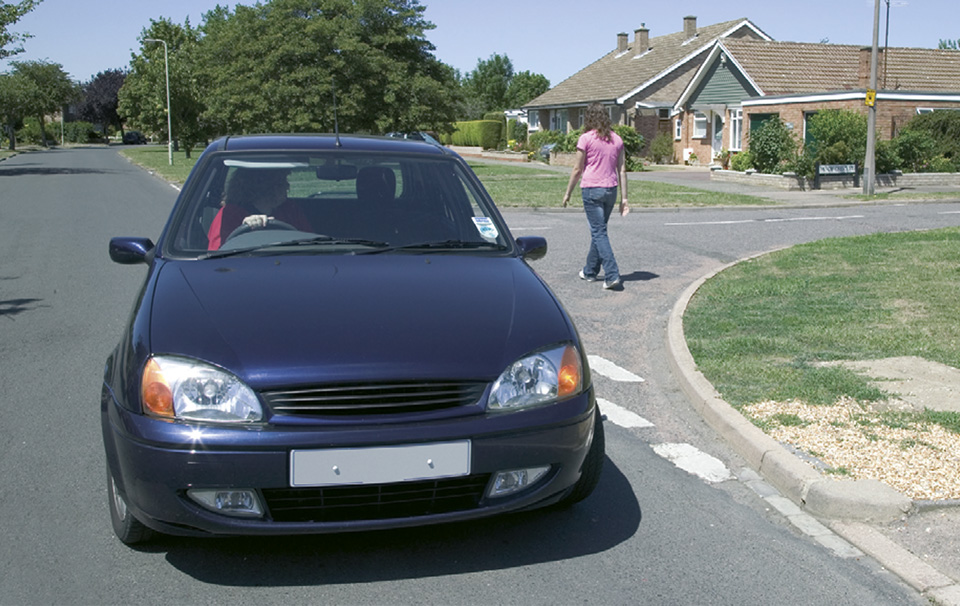
Why This Matters
Reverse manoeuvres are one of the clearest places where weak observation is exposed during a practical test.
Coach Note
The reverse is not about speed. It is about control, awareness and knowing when to pause.
Learning Goals
- Use a complete all-around observation pattern.
- Give way correctly while reversing.
- Recognise high-risk environments for reversing.
- Use a stop-check-reset mindset instead of rushing.
Sections
Reverse Observation Pattern
Look all around, not just behind.
Check All Around
Look in front of and behind the vehicle, over both shoulders, directly through the rear window and in your mirrors.
Give Way
When reversing, give way to pedestrians and other traffic.
Keep Re-Checking
Reversing safely is a continuous observation task, not one check at the start and then movement on autopilot.
Common Mistakes
- Using mirrors only.
- Checking behind but forgetting the front swing.
- Continuing to reverse after losing a clear view.
Quick Quiz
Which statement is best?
- A. Mirrors are enough if you are reversing slowly.
- B. You only need to check behind you once at the start.
- ✓C. You should look all around, including front, rear window, shoulders and mirrors.
- D. If nobody is behind you, the front does not matter.
The book emphasises all-around observation, not mirror-only reversing.
High-Risk Reverse Areas
Small children and limited visibility make reversing far riskier.
Restricted View
If your view is restricted, get help or get out and check the area.
Reversing In Darkness
Take extra care in darkness because movement and hazards are harder to detect early.
Common Mistakes
- Reversing by habit in familiar places like a driveway.
- Assuming a residential street is low-risk.
- Trying to continue when visibility is poor.
Reverse Test Coaching
A tester is looking for observation, restraint and composure.
Coach Tips
- •Slow, deliberate movement gives you time to update observations.
- •A pause to check again is usually a good sign, not a bad one.
- •If in doubt, stop, secure the car if needed, and reassess.
Self-Check
- Did I look through the rear window as well as the mirrors?
- Did I keep checking during the move?
- Did I give way to other road users?
- Did I stop when unsure?
Know the route before test day.
Turn nervous drives into focused practice. Follow independent route patterns with clear, turn-by-turn voice guidance on iPhone and Android.


Built for iPhone & Android
Practise at your own pace