
Motorways, Speed and Stopping Distance
High-speed awareness, motorway discipline and realistic stopping-distance judgement.
Why This Matters
These topics build road judgement and planning, even when the practical test route does not directly use motorway driving.
Coach Note
Learners often think stopping distance is only about brakes. The book frames it as perception, reaction and braking together.
Learning Goals
- Understand the factors that create stopping distance.
- Know the core motorway lane and exit rules.
- Avoid dangerous motorway habits such as missing exits badly or stopping without cause.
- Plan rest and fatigue management for longer journeys.
Sections
Stopping Distance
It takes longer to stop than many drivers assume.
Four Parts Of Stopping Distance
Stopping distance depends on perception time, reaction time, vehicle reaction time and braking capability.
Reaction Time Varies
Reaction time can be much longer than drivers think, especially with tiredness, distraction or poor conditions.
Higher Speed Multiplies Risk
The faster the vehicle travels, the more road is used before the vehicle fully stops.
Common Mistakes
- Assuming you can stop in the same gap the car ahead had before braking.
- Ignoring wet or dark conditions.
- Following too closely because the road feels easy.
Quick Quiz
What is the recommended minimum safe time gap to maintain behind the vehicle ahead in dry conditions?
- A. 1 second
- ✓B. 2 seconds
- C. 5 seconds
- D. 10 seconds
The 2-second rule is the standard minimum safety gap behind the vehicle ahead in dry conditions.
In wet weather conditions, how should your following distance change?
- A. Stay at 1 second
- ✓B. Increase to at least 4 seconds (double the dry gap)
- C. Decrease distance to see their brake lights better
- D. It does not change
Wet weather doubles stopping distances, so the minimum gap increases from 2 seconds to 4 seconds.
When are you allowed to drive on the hard shoulder of a motorway?
- A. During traffic jams to reach an exit
- ✓B. Only in an emergency or when directed by Gardaí or motorway signage
- C. When overtaking slow trucks
- D. Whenever taking a phone call
The hard shoulder is strictly for emergencies, breakdowns, or official direction.
Motorway Discipline
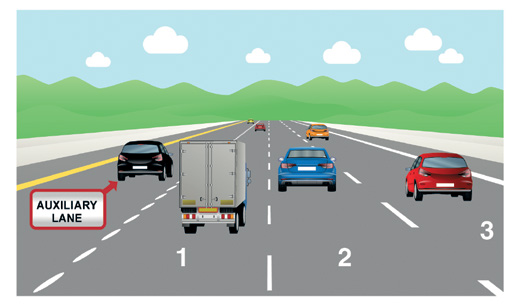
Keep left, overtake on the right and plan early.
Keep Left
Use the left lane as the normal driving lane and use the outer lane mainly for overtaking.
If You Miss The Exit
Drive on to the next exit. Never reverse and never try to cross back.
High-Speed Awareness
At motorway speed, poor spacing and poor lane planning become more dangerous much faster.
Common Mistakes
- Staying in the overtaking lane.
- Trying to recover a missed exit dangerously.
- Tailgating because traffic is flowing.
Quick Quiz
What should you do if you miss your motorway exit?
- A. Reverse carefully on the shoulder
- ✓B. Continue to the next exit
- C. Cross the painted area to return
- D. Stop and wait for a safe gap
You must continue to the next exit rather than attempt a dangerous recovery.
Rest, Stops and Emergencies
Plan breaks and know when stopping is actually allowed.
Plan Breaks
Before a long motorway journey, plan where you will stop to rest and use motorway services.
When Stopping Is Allowed
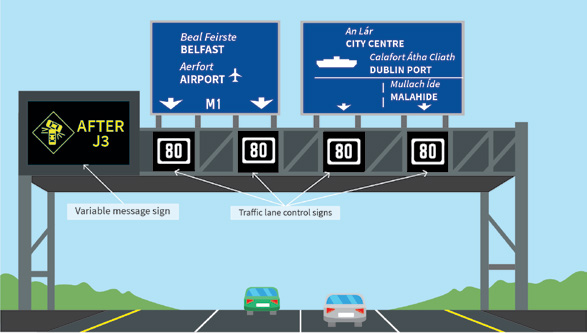
You may only stop or park on the motorway for breakdown, emergency, roadworks, Garda direction or at a toll plaza.
Common Mistakes
- Treating the hard shoulder like a casual stopping place.
- Driving long distance without fatigue planning.
- Ignoring tyre pressure and vehicle readiness before a long fast journey.
Know the route before test day.
Turn nervous drives into focused practice. Follow independent route patterns with clear, turn-by-turn voice guidance on iPhone and Android.


Built for iPhone & Android
Practise at your own pace